
Team underperformance rarely emerges from a single failure point. Instead, it develops through the accumulation of unaddressed stressors, systemic vulnerabilities, and depleted adaptive capacity.
Resilience addresses the root cause of why teams falter, providing a strategic framework for sustainable performance improvement.

The Economic Imperative for Intervention
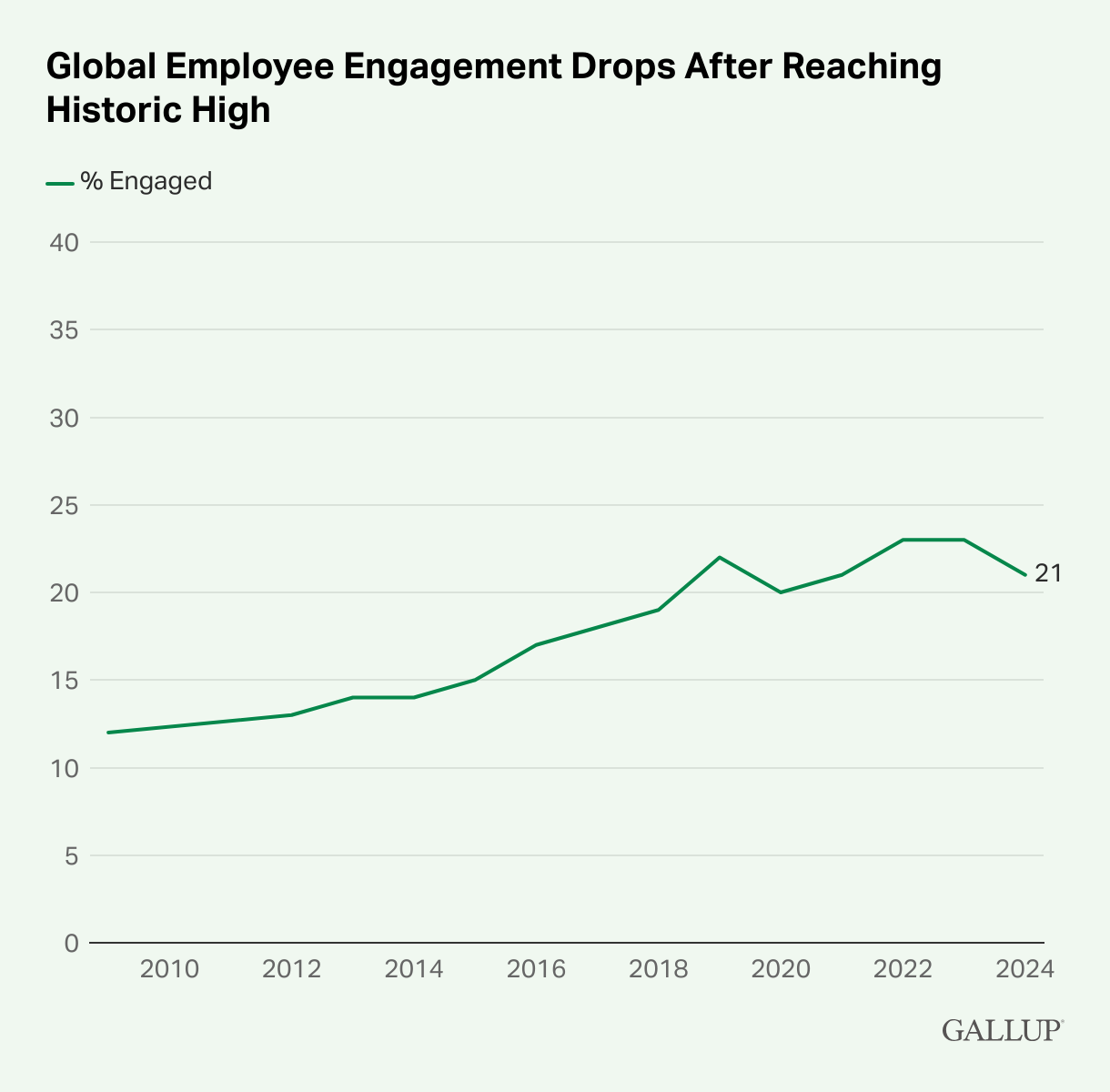
Gallup's 2025 State of the Global Workplace report quantifies what organizational leaders intuitively understand: team underperformance carries substantial costs.
Disengagement alone costs the global economy $438 billion annually. -Gallup
Beyond immediate productivity losses, struggling teams create cascading effects that can cost the organization through high turnover, reduced capacity and creativity, and inefficiency.
It’s a trend that will continue unless employers make changes that bring employees back in.
Root Cause: Eroded Psychological Safety
Safety erodes gradually:
Leaders blame instead of problem-solve
Management dismisses concerns as incompetence
Standards shift depending on who you are
Transparency gets punished
Google's Project Aristotle found psychological safety matters more than skills, resources, or goals. Without it, people protect themselves instead of solving problems.
Work on it: Normalize productive failure. Frame mistakes as data, not character flaws. Leaders go first – own your missteps and knowledge gaps so your team feels safe doing the same.
Root Cause: Ambiguity and Misalignment
Teams flounder when no one can answer:
What does success actually look like here?
How does our work connect to the bigger picture?
What resources do we actually have?
What wins when priorities conflict?
That ambiguity burns energy, duplicates effort, and demoralizes people.
Work on it: Document success criteria, decision authority, and resources – explicitly. Hold regular check-ins to surface confusion before it becomes dysfunction.
Managers that are “thriving” are in steep decline:
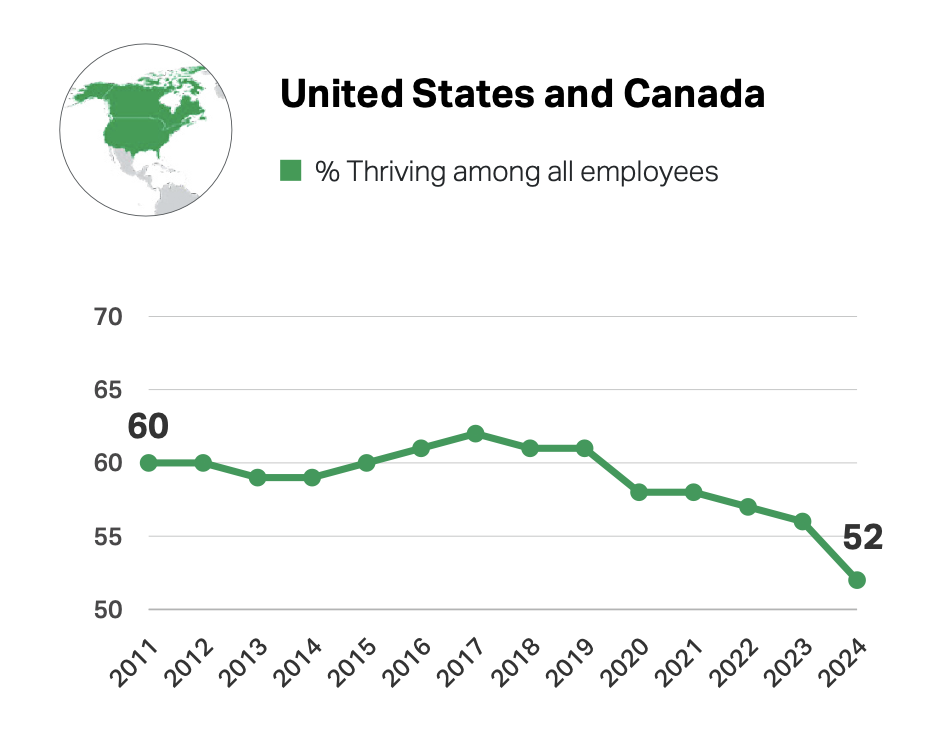
Source: Gallup 2025 State of the Global Workplace report
Root Cause: Learned Helplessness
Chronic failure becomes identity. Teams stop trying because trying feels pointless. You'll see it in reduced initiative, cynicism, and your best people quietly leaving.
Neuroscience backs this up: achievement triggers dopamine. Repeated failure without wins depletes it.
Work on it: Engineer quick wins. Find something achievable in 2-3 weeks. Give the team proof they can succeed. Shift the story from "we fail" to "we succeed when conditions support us."
Root Cause: Leadership Accountability Gaps
Sometimes teams fail because leadership created the conditions for failure:
Structural barriers no one will remove
Resources promised but never delivered
Competing directives with no prioritization
Culture that punishes honesty
Then leadership holds the team accountable for outcomes they never had the authority or resources to achieve.
Work on it: Audit leadership before you audit the team. Remove the barriers you control. Own your role in the problem – publicly. That shifts the dynamic from blame to collaboration.
Root Cause: Adaptive Capacity
Routines can create complacency. What worked last year might not work now. With the advent of AI, there’s even more pressure to do more with less.
Work on it: Cross-train to eliminate single points of failure. Run after-action reviews on wins and losses. Plan for multiple scenarios. Push decision-making authority down so people can move fast.
Underperformance has root causes — psychological safety, clarity, helplessness, leadership gaps, and adaptability. Address those directly. That's how you build teams that don't just survive pressure — they get stronger from it.
Is your team ready to handle what comes at them? Take the resilience quiz and find out.