
We have sat across the table from many leaders trying to handle big structural shifts like mergers, reorgs, and leadership transitions, with grace. These are the type of changes that create fear and an unspoken tension that can ripple throughout a team.
After years of walking alongside organizations through those moments, we came to the conclusion that the new org chart is rarely the hard part.
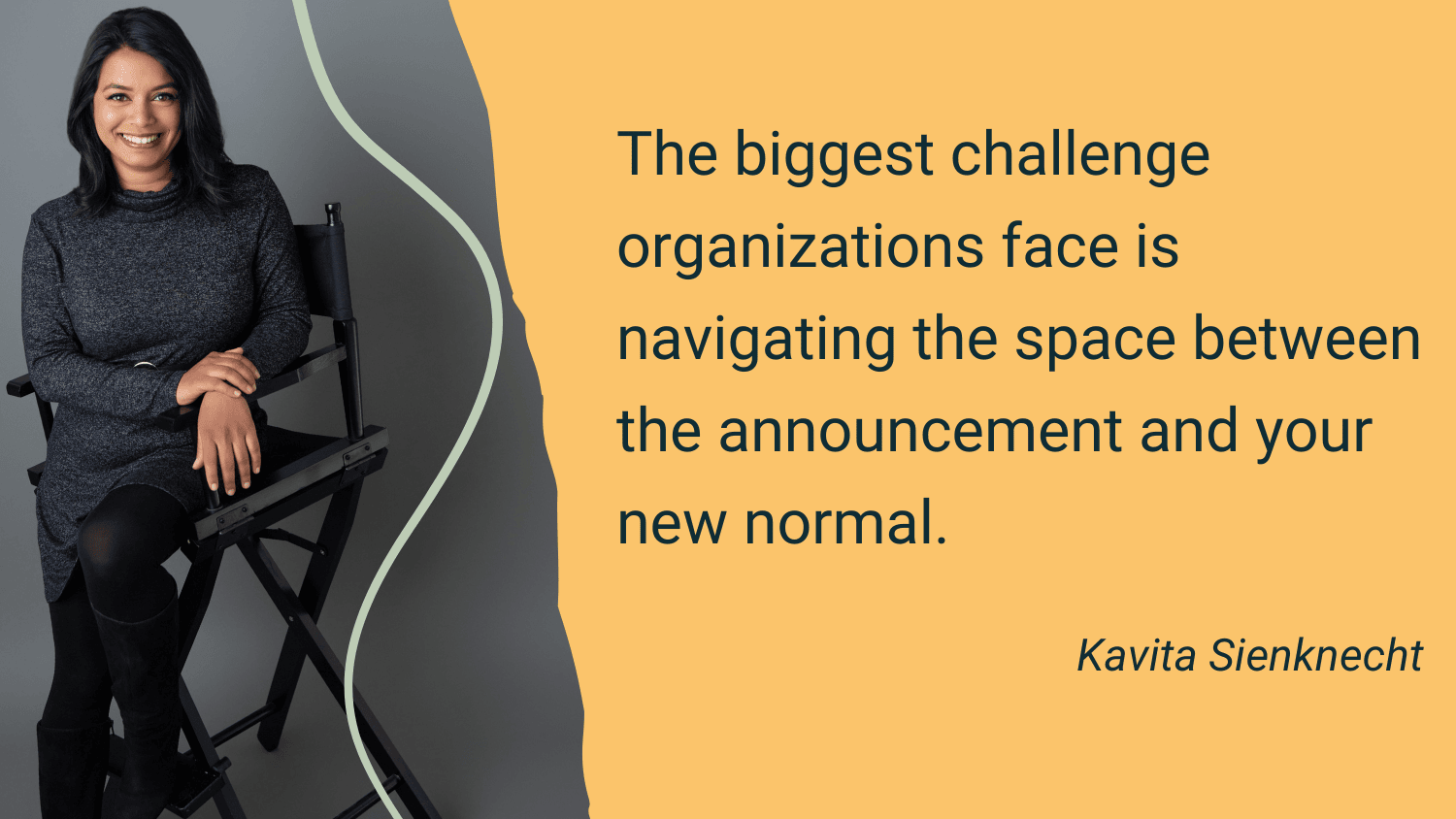
The hard part is the space between the announcement and the new normal.

The Messy Middle Is Where It Happens
Most organizations spend an enormous amount of energy designing the new structure that they want to implement, but they don’t spend time preparing people to live inside it.
The slide deck goes out, the announcement gets made, and then everyone is expected to adapt. But information is not enough; to adapt, people need clarity, patience, consistency, and a sense of being seen.
The teams that navigate change well, move deliberately and intentionally. They're the ones who make sure everyone can answer three core questions:
What's changing?
What's staying the same?
And how do decisions get made now?
Easing tension comes from knowledge of what is going to happen next, including clarity on decision ownership.
Resilience Is Infrastructure
True resilience in organizations is built upon people feel safe enough to ask questions, raise concerns, and admit confusion without fear.
As organizational psychologist Amy Edmondson explains, psychological safety "is not about being nice to each other — what it's about is candor; what it's about is being direct, taking risks, being willing to say, 'I screwed that up.'" During structural change, candor is a survival skill.
Leaders can actively cultivate this during transitions by doing something that feels counterintuitive: saying "we don't know yet" when they don't know. It sounds like a liability, but it's a trust-builder. People can tolerate uncertainty far better than they can tolerate being kept in the dark.
The Basic Roadmap To Get Through This Period
Tell people the steps, then follow through on them.
Explain the why: Before anything else. People resist what they don't understand.
Identify who's affected and how: Be transparent and .
Communicate early and often: Silence creates a vacuum that gets filled with rumors.
Give people a role in the transition: Ownership reduces fear.
Acknowledge the difficult situation.
Set clear timelines and expect to use flexibility.
Train for the new reality: Don't assume people know what to do next.
Collect feedback and actually use it, or don't ask.
Celebrate small wins: Momentum matters.
Check in even after it all feels “over”, as ripple effects can last.
Change is Uncomfortable, Pushback is Normal
Emotional reactions or frustrations is not resistance to be managed. It is data that needs to be understood.
When someone pushes back on a change, the instinct is to clarify the rationale. But most pushback during transitions isn't logical, it's human. People are processing what may change for them:
Relationships
Routines
A sense of where they belong
A sense of security
Instead of assuming that there’s alignment, check for it. Overcommunication sometimes feels like too much, but generally, more is better when it comes to two-way communication – that means listening as much as (often more than) explaining.
Before you can ask a team to embrace what's next, you have to give them space to close the chapter they're in.
The Bigger Opportunity
Here's what years of walking alongside organizations through transformational change has reinforced for us, and it’s that the organizations that come out stronger aren't the ones that had the smoothest transitions.
They're the ones who used the transition to deepen trust, clarify values, and grow their people.
Structural change is a stress test for culture. And when organizations approach it with humanity and intention, when they lead with empathy, communicate with honesty, and hold space for the messiness of real transition, they come out more resilient than before.
To get started with managing a big organizational shift, contact us for a free consultation.